
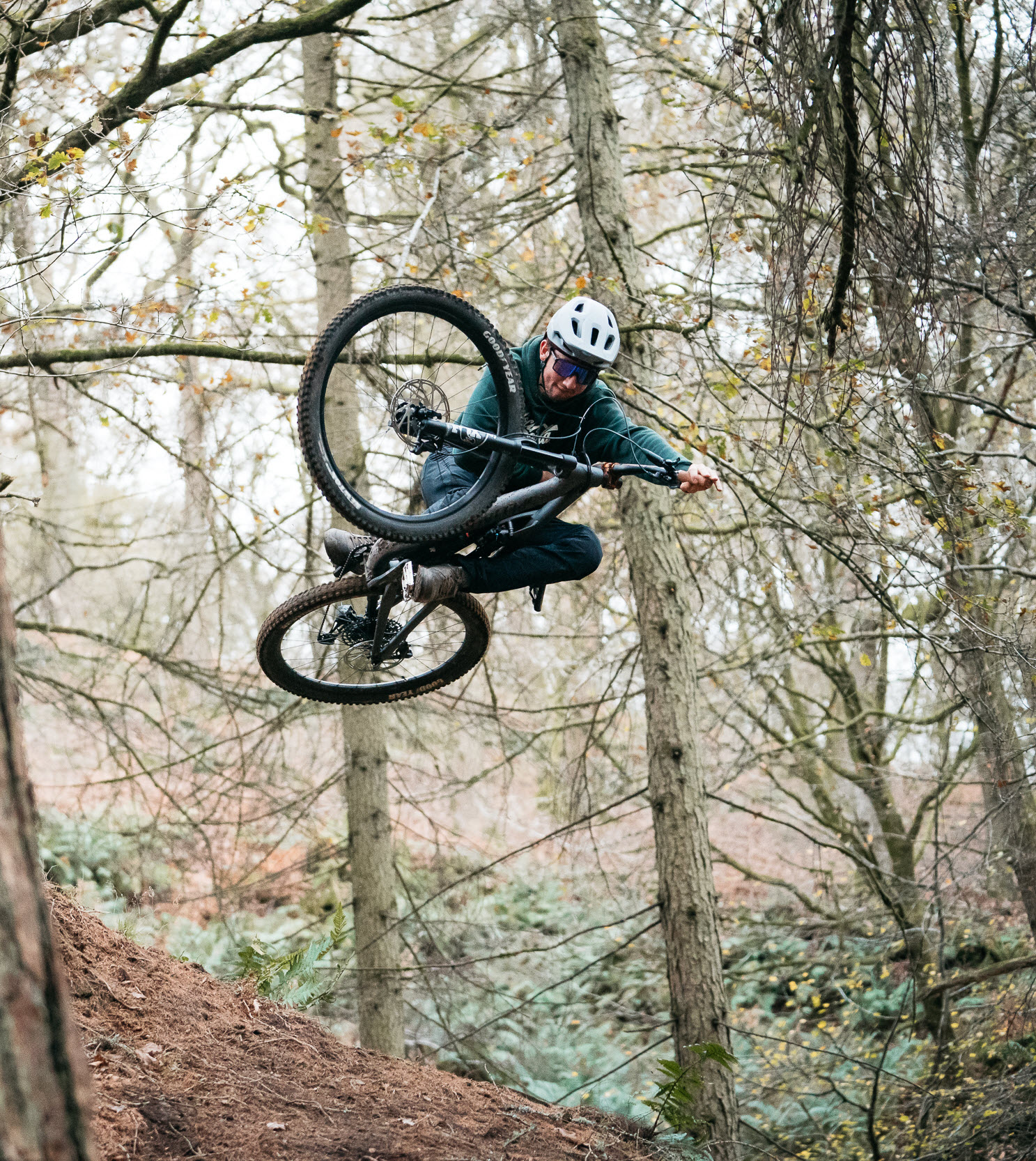
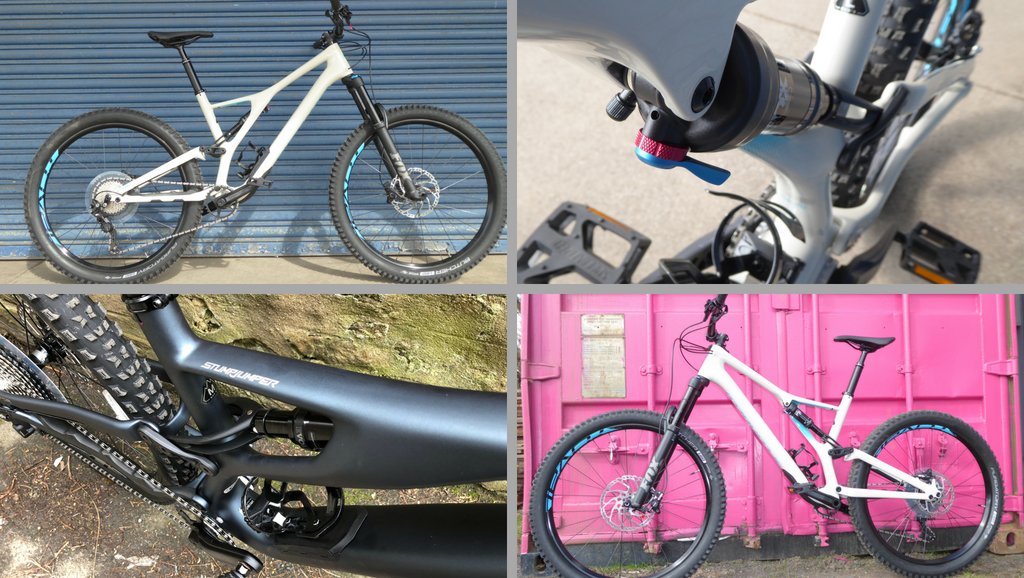
There are few names that are as recognisable in the mountain bikes world as the Specialized Stumpjumper. First released in 1981, it has been a mountain biking staple ever since. Over the years, Specialized have innovated and evolved the Stumpjumper to the full suspension trail bike that it is today.
Contents and Quick Links
- Stumpjumper Frame Material
- Stumpjumper MTB Category
- Front Suspension
- Rear Suspension
- Front and Rear Wheel Setup
- Sizing
- Stumpjumper Evo
- New Stumpjumper Models
- Previous Year Models
- Frequently Asked Questions
In this article, we are going to have a look at the latest version of the Stumpjumper that is almost unrecognisable from the 1981 rigid fork model from over 40 years ago. It has developed from a steel frame with no suspension, to a full suspension bike that is available with an aluminium or carbon frame.
You can always tell a quality bike from the opinion held by the people that sell them. Our colleague Gav, a very keen mountain biker, would choose a Stumpjumper over any other full-suspension mountain bike we sell, and that’s saying something.
There is currently a sale on Stumpjumper and a full Specialized bike sale.
Specialized Stumpjumper Review
As we have said, the Stumpjumper has come a long way in the 40 plus years of its existence and the newest innovations give you one of the most versatile, customisable and fun mountain bike that you can find. Below we discuss the category the new stumpy falls in to and the latest innovations on the new models (Stumpjumper 15).
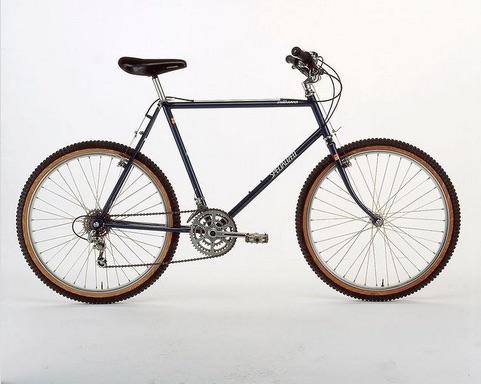
The first Stumpjumper from 1981
Stumpjumper Frame Material
The Specialized Stumpjumper is available in two frame materials – aluminium alloy or carbon. Aluminium alloy is significantly cheaper than carbon so you will find this on the lower-end Stumpjumpers and you will know these are the aluminium version as they will have “alloy” in the title e.g. Specialized Stumpjumper Alloy Comp. For the models that do not contain the word ‘alloy’, you know these are the carbon composite frame design.
- Aluminium benefits – As we mentioned above, it’s relatively inexpensive and it’s strong meaning you can get a less expensive bike that still performs well.
- Carbon benefits – Carbon is stiffer for more pedalling efficiency and is lighter too which, combined, make climbing much more efficient. More expensive to manufacture and produce than Alloy so expect to pay more for carbon bikes.
Stumpjumper Category
The Specialized stumpjumper is in the classic trail mountain bike category meaning these bikes are good for climbing and are very capable while descending on semi technical trails. Trail bikes sit directly between cross country bikes that have less travel and a more upright head angle and enduro bikes that will have more travel and a slack head angle.
Trail bikes tend to be popular as they are the best of both worlds – good climbers and excellent descenders due to the geometry and the suspension.

Front Suspension
It is hard to imagine a Specialized Stumpjumper without suspension forks but that’s how the poor mountain bikers in the 80’s had to do it. Thankfully, technology has advanced massively to provide air suspension for more forgiveness when biking down hills. The new stumpy 15 has 150mm of front fork travel (140mm on the smallest S1 size) to strike the balance between downhill capability and climbing efficiency.
As you go up through the range of Specialized Stumpjumper, you will get progressively better front suspension meaning you will get a smoother fork with more adjustability as well as getting stiffer stanchions that leads to better and more predictable handling and breaking.
Choosing the correct level of front suspension will depend on how and where you are using the bike. There are certain riders that can justify better quality forks such as heavier riders, people that ride on technical terrain, people that push their bike to the limit and electric mountain bike riders. We are always happy to talk this through with you to see if you would benefit from a higher spec of full suspension bike.
Front and rear suspension have to be in balance in order to provide the best ride quality and handling so we will have a look at the rear shock now.
Rear Suspension
With 150mm of travel up front it would be normal for the rear suspension to be slightly less and the Specialized Stumpjumper is no different. In this case the rear suspension travel is 145mm (slightly less on the smallest S1 size) for perfect balance when descending.
As you go up through the Stumpjumper 15 range, you will get a better rear shock on each model which gives you better handling and better traction and control of the rear wheel. With the better quality rear shocks, you will also get more adjustability other than the usual rebound and compression adjust, you might also get low and high speed adjustment.
Aside from suspension, the shape, or the geometry, of the bike will affect how it performs on certain terrain and how it handles.
Stumpjumper Geometry
We have touched upon the fact that the geometry of a mountain bike will dictate which terrains and riding style these will suit but here we look at one of the biggest innovations in mountain biking over the last couple of years – adjustable geometry.
We have mentioned above that the Stumpjumper is a trail bike that sits in the middle in terms of climbing ability and downhill control but what you are now able to do is adjust the geometry on a modern full suspension mountain bike. The new Stumpjumper 15 has the ability to be set up in 6 different geometry settings to adjust the fork angle and bottom bracket height for either a slacker or more upright setting depending on how you use the bike and your personal preferences.
One aspect of modern mountain bikes that goes hand in hand with geometry is the wheel size.
Front Wheel and Rear Wheel Set Up
The Stumpjumper ’81 came with 26 inch wheels for a bike that could handle well in tight, technical trails but now, mountain bikes have two wheel standards – 29 inch or 27.5 inch (650B). Typically, you would choose a 29 inch wheeled mountain bike for a stable and fast bike in a straight line or on flowing trails or you would choose a 27.5 inch bike for a shorter and more nimble bike that corners really well on the most technical terrain.
Stumpjumper 15 opts for the 29er front and rear wheel set up* for a stable and fast bike for flowing trails however there is a difference that is made possible by the latest innovation in mountain biking and that is the ability to change the size of the rear wheel to a mixed wheel setup, also known as ‘mullet set-up.
The mullet, or mixed wheel setup, has become more and more popular over the last couple of years as this gives the stability of a front 29 inch wheel with the added manoeuvrability of a 27.5 rear wheel – best of both worlds. Along with the 6 geometry settings, this mixed wheel potential makes the Stumpjumper one of the most adjustable bikes out there.
*The smaller sizes of Stumpjumper (S1 & S2) come set up mixed off the peg with 29er front and 27.5 rear.
Sizing
For a long time in mountain biking, the sizes were typically the classic small, medium, large, or 17″, 19″ and so on. A number of years ago, Specialized changed the sizing system to the “S” sizing and are available from S1 to S6 with a slightly different approach to sizing also. Rather than there only being one option for a rider, a rider has 2 and sometimes 3 options for a bike. Specialized recommend sizing up for a more stable, longer bike for excellent straight line stability for flowing trails or to size down for a more nimble, manoeuvrable bike for more technical terrain. Size chart is below for reference.
| Rider Height | Bike Size | |
|---|---|---|
| 4′ 11″ – 5′ 3″ | 150 – 160cm | S1 |
| 5′ 2″ – 5′ 8″ | 157 – 173cm | S2 |
| 5′ 5″ – 5′ 11″ | 165 – 180cm | S3 |
| 5′ 8″ – 6′ 2″ | 173 – 188cm | S4 |
| 5′ 10″ – 6′ 4″ | 178 – 193cm | S5 |
| 6′ 2″ – 6′ 8″ | 188 – 203cm | S6 |
Stumpjumper Evo
Until last year (2024), a slightly different Stumpjumper model was available, the Stumpy Evo. Even though this is being discontinued, we will include this just for information as there are some subtle tweaks over the Stumpjumper itself.
The Stumpjumper Evo was designed to be a more downhill version of the Stumpjumper with more travel (150mm front suspension travel on the s1 size and 160mm of travel on the S2 to S6 version) and a slacker head angle so it would be better on the descents than the Stumpjumper but not as good on the uphills.
That concludes our (brief?) overview of the new Specialized Stumpjumper so we will move on to look at the newest models and then some of the older models that are still available.
Which Stumpjumper is Right For You?
We go into details about the individual models below but here is a brief guide to the bets model for different riders
New to Trail Riding
If you are new to trail riding then a models on the lower end of the scale would suite perfectly. Assuming new riders will be on more relaxed trails more and don’t want to spend too much, the Specialized Stumpjumper 15 Alloy or the Stumpjumper 15 Comp Alloy would be good choices.
Rider Looking for More Technical Trails
If you are looking for more technical trails then a bike with better forks and shocks would be worthwhile. Better forks offer more stability when cornering and braking. The forks and shock will offer smoother, more predictable compression on the harder hits also. For this reason, the intermediate rider will benefit from the Specialized Stumpjumper 15 Comp.
Experienced Riders
The more experienced riders will likely be looking to take on really technical trails so will require top spec to give the best riding experience. The Stumpjumper 15 Expert or the Stumpjumper 15 Pro have incredible specs and will be able to take on most trails.
Stumpjumper 15 Models
We have a couple of the brand new models of Stumpjumper 15 in stock and we will update as we get more. We are awaiting the Stumpjumper 15 Alloy to drop also so watch this space for news when it arrives. Having ridden the Stumpjumper 15 myself, I can honestly say that it is an exceptional climber despite the mid-range travel and can handle anything on the downhills that I am able to tackle. The Stumpjumper is available in carbon and alloy versions. one bike park
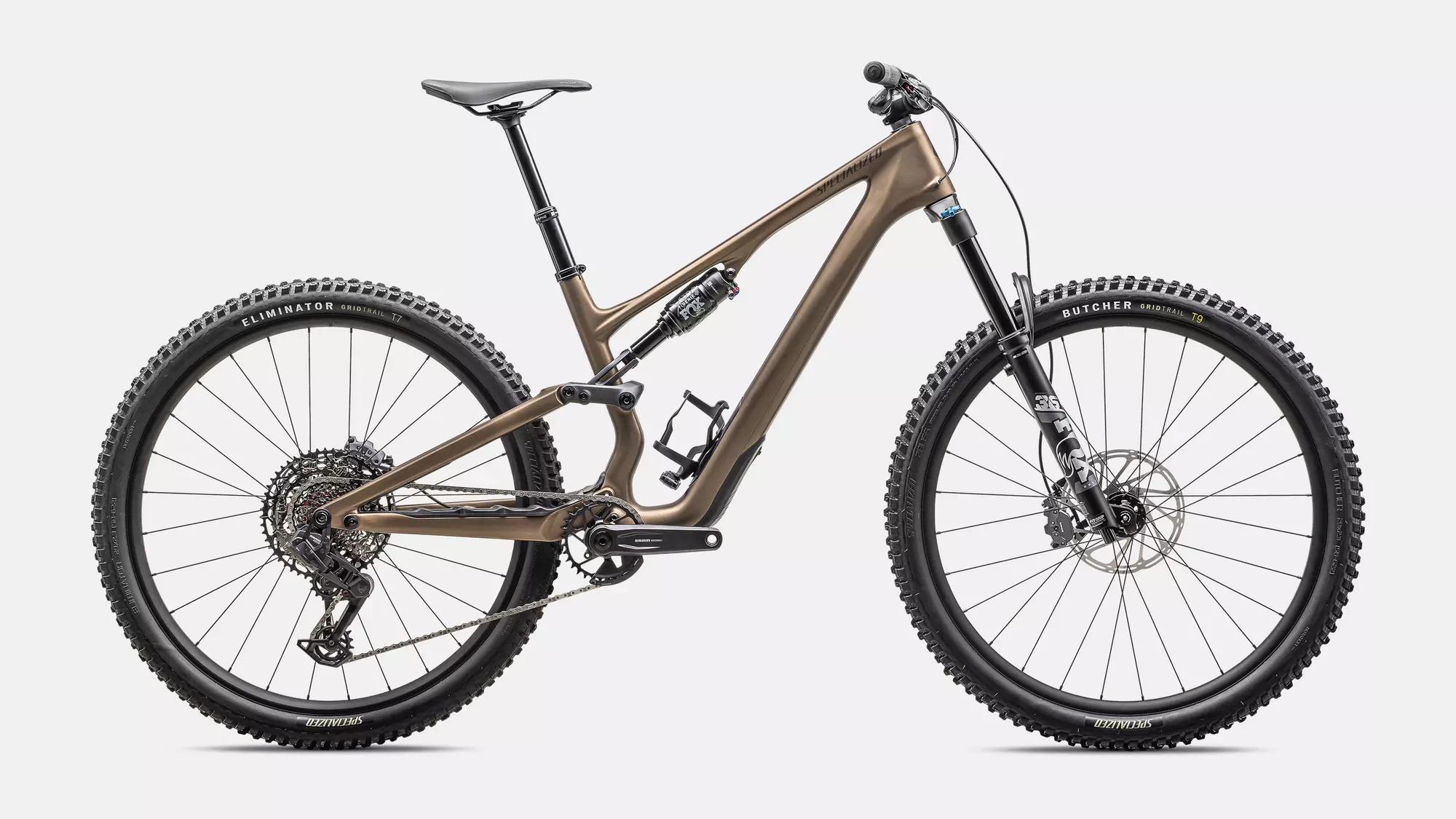
Specialized Stumpjumper 15 Comp
- Frame – The frame on the Stumpjumper Comp 15 is 11m full carbon frame and rear end which is the top level of carbon that Specialized produce – it is the same as is on their S-Works Stumpjumper 15.
- Front Suspension – Eat up the chunkiest trails with the FOX FLOAT 36 Rhythm fork with GRIP damper. The S1 size comes with 140mm of travel and the sizes S2 to S6 come with 150mm of front suspension travel.
- Rear Shock – Ride Dynamics tuned FOX FLOAT Performance with Specialized GENIE Shock Tech. 2-position open and firm damper adjustments. Specialized claim that their Genie technology increases the traction by keeping the rear wheel in contact with the ground more while vastle reducing the chance of bottoming out.
- Wheels – Specialized, hookless alloy wheels, 30mm inner width, tubeless ready with alloy, sealed cartridge bearings hubs.
- Gearing – The Comp 15 comes with SRAM AXS 12 speed wireless gearing with S1000 Eagle components for reliable, effortless and smooth shifting in all conditions.
- Brakes – Powerful and responsive SRAM Maven Bronze four piston brakes for incredible stopping power on the steepest trails. The front brake rotor is 200mm to increase the stopping power and the rear is 180mm on the smaller S1 and S2 sizes and 200mm on the S3 to S6 sizes.
Specialized Stumpjumper 15 Expert
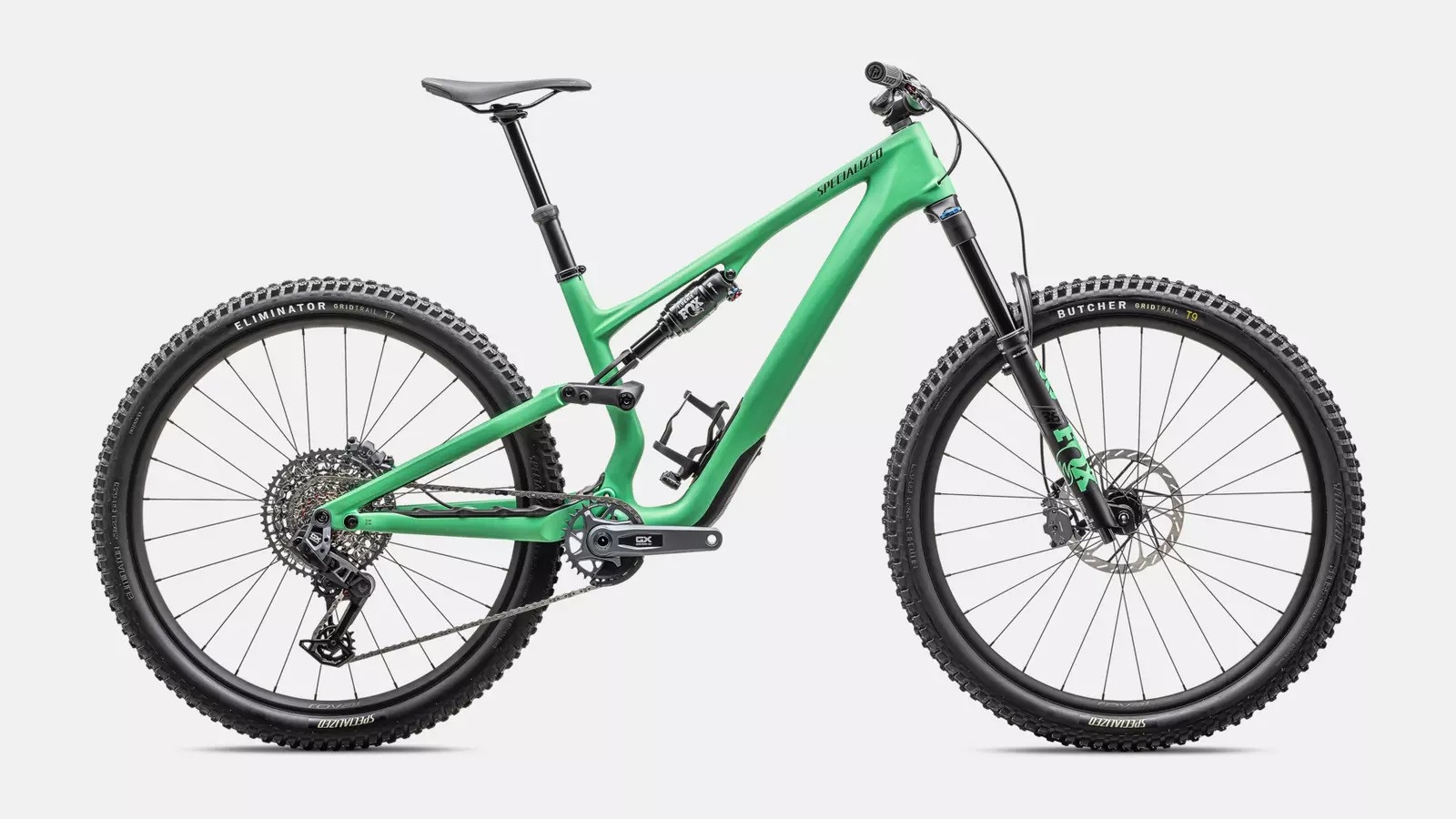
- Frame – The frame on the Stumpjumper Expert 15 is 11m carbon frame and rear end which is the top level of carbon that Specialized produce – it is the same as is on their S-Works Stumpjumper 15. Internal cable routing.
- Front Suspension – FOX FLOAT 36 Performance Elite, GRIP X2 damper, high and low settings for rebound and compression adjustment for incredible adjustability that can be fine tuned to your exact personal preferences.
- Rear Shock – FOX FLOAT Performance Elite with Specialized GENIE Shock Tech, Ride Dynamics Trail Tune, 2-position lever w/3 setting Open mode tuning range, LSR adjustment. Specialized claim that their Genie technology increases the traction by keeping the rear wheel in contact with the ground more while vastle reducing the chance of bottoming out.
- Wheels – Specialized, hookless alloy, 30mm inner width, tubeless ready with alloy, sealed cartridge bearings hubs
- Gearing – SRAM AXS 12-speed wireless shifting with GX Eagle componentry for reliable, effortless and smooth shifting in all conditions
- Brakes – Powerful and responsive SRAM Maven Bronze four piston brakes calipers for incredible stopping power on the steepest trails. The front brake rotor is 200mm to increase the stopping power and the rear is 180mm on the smaller S1 and S2 sizes and 200mm on the S3 to S6 sizes.
Specialized Stumpjumper 15 Pro
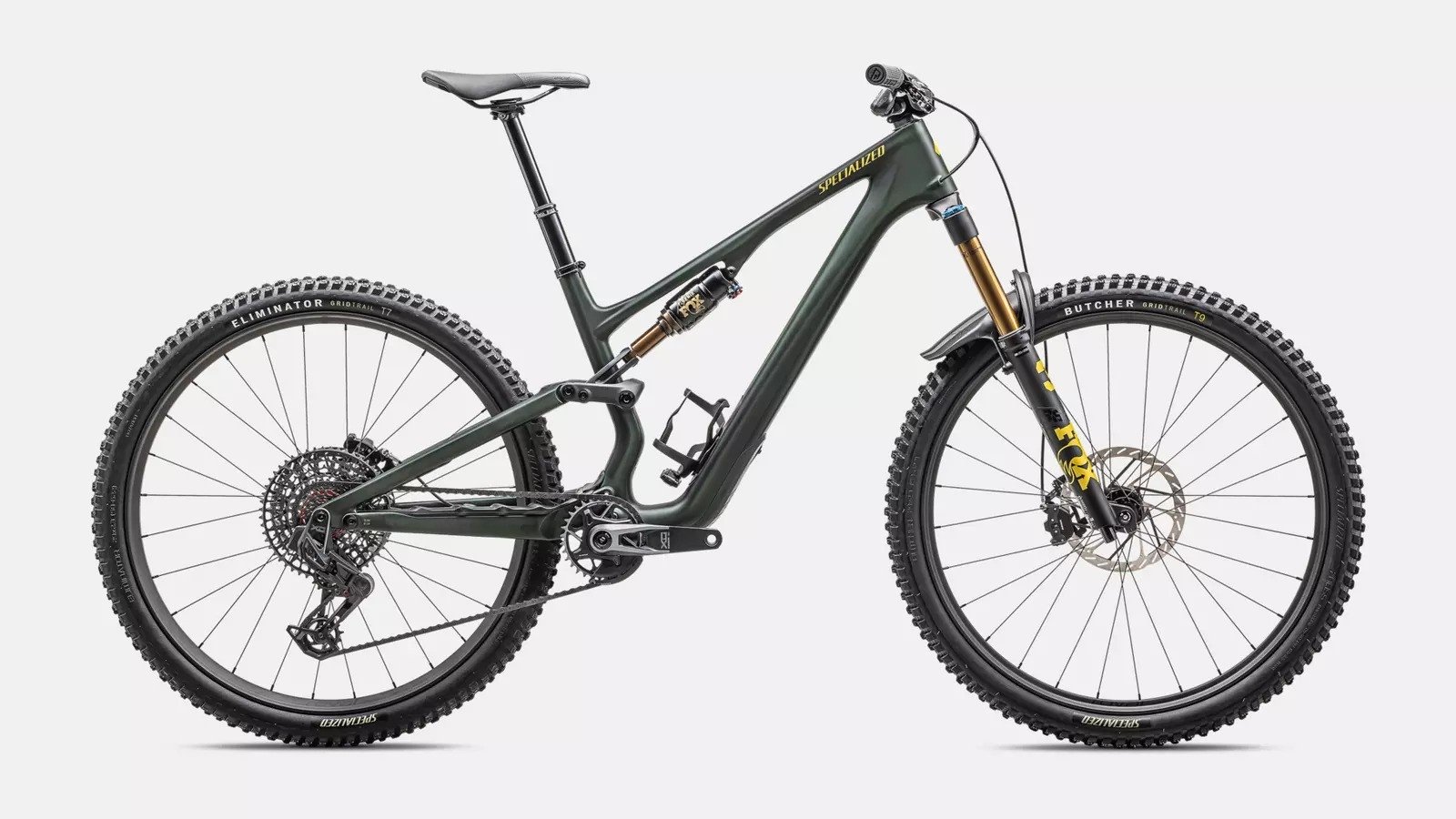
- Frame – The frame on the Stumpjumper 15 Pro is 11m carbon frame and rear end which is the top level of carbon that Specialized produce – it is the same as is on their S-Works Stumpjumper 15.
- Front Suspension – FOX FLOAT 36 Performance Elite, GRIP X2 damper, HS and LS rebound and compression adjustment for incredible adjustability that can be fine tuned to your exact personal preferences.
- Rear Shock – FOX FLOAT Performance Elite with Specialized GENIE Shock Tech, Ride Dynamics Trail Tune, 2-position lever w/3 setting Open mode tuning range, LSR adjustment. Specialized claim that their Genie technology increases the traction by keeping the rear wheel in contact with the ground more while vastly reducing the chance of bottoming out.
-
Wheels – Roval Traverse SL II, hookless carbon wheels for increased stiffness for excellent handling and lighter weight for easier climbing. Eliminator grid trail rear tyre.
- Gearing – SRAM AXS 12-speed wireless shifting with GX Eagle componentry for reliable, effortless and smooth shifting in all conditions
- Brakes – Powerful and responsive SRAM Maven Bronze 4 piston calipers for incredible stopping power on the steepest trails. The front brake rotor is 200mm to increase the stopping power and the rear is 180mm on the smaller S1 and S2 sizes and 200mm on the S3 to S6 sizes.
Also Available
Previous Stumpjumper Models
It is a great time to get a deal on past year models of Stumpjumper and we still have a couple on stock. Here they are.
Specialized Stumpjumper Evo Expert
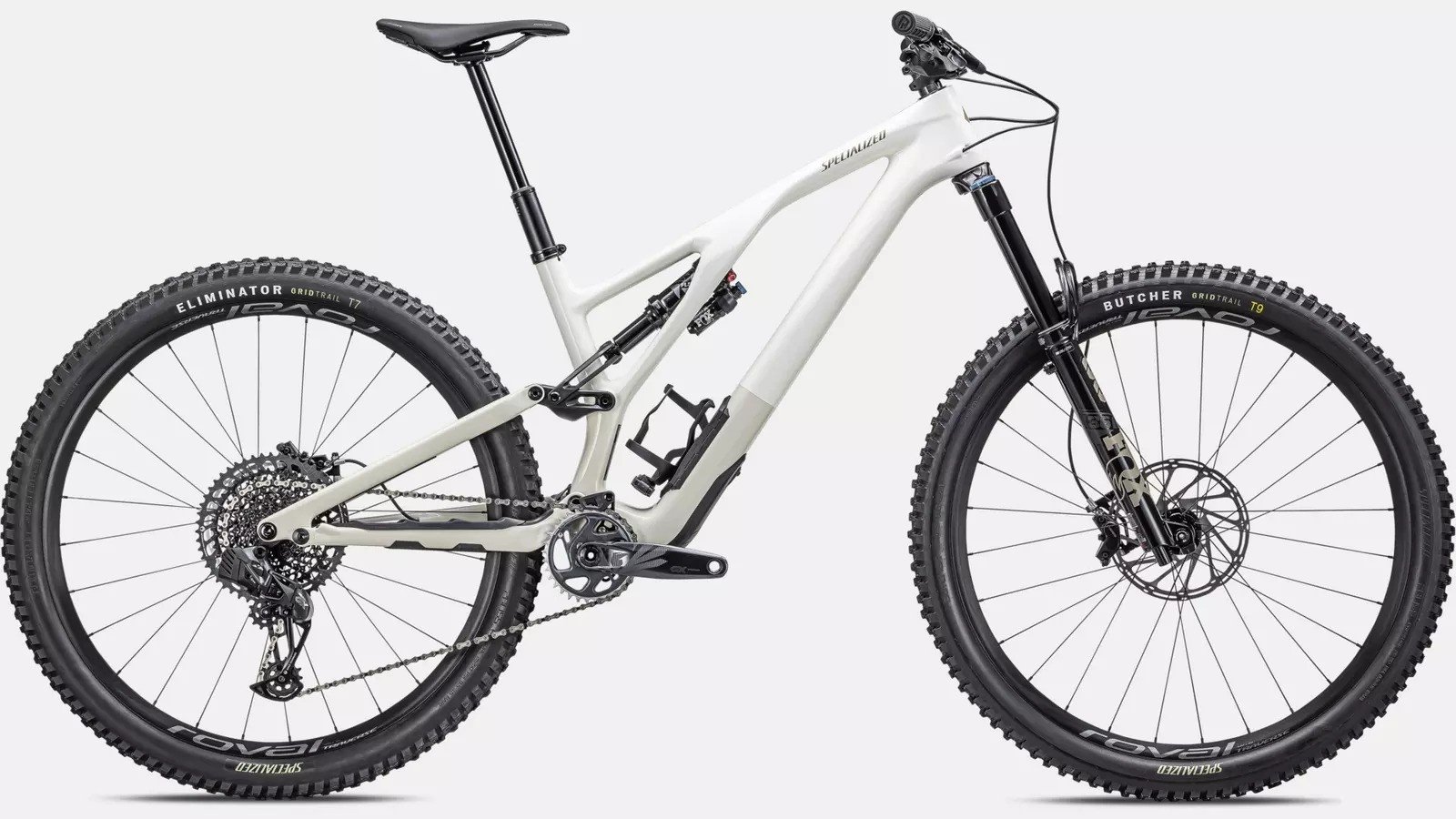
- Frame – FACT 11m carbon chassis and rear-end, asymmetrical design, 29 Trail Geometry.
- Front Suspension – FOX FLOAT 36 Performance Elite, GRIP2 damper. 160mm of travel on the S2 to S6 sizes and 150mm of travel on the S1 size.
- Rear Shock – FOX FLOAT X Performance Elite, Rx Trail Tune, EVOL Air sleeve, 2-position lever w/ LSC adjustment.
- Wheels – Roval Traverse 29 Alloy with Roval, sealed cartridge bearings hubs.
- Gearing – SRAM GX Eagle 12-speed mechanical shifting for reliable and precise shifting on even the roughest terrain.
- Brakes – SRAM Code RS, 4-piston caliper, hydraulic disc, 200mm rotors all adding up to sharp and powerful brakes for stopping in all situations.
Frequently Asked Questions
As is becoming a bit of a feature on our blogs, we trawl the internet for the most popular questions related to the blog. Here goes…
What is a Specialized Stumpjumper Used For?
First and foremost, the Specialized Stumpjumper is a full suspension mountain bike designed to be used off-road on mountain trails including trail centres. As we discussed previously, the Stumpjumper is a trail bike, meaning it would be best used for trails where with some climbing and fairly technical descents. The 150mm/145mm suspension set up and slack-ish geometry are what gives the Stumpjumper these characteristics.
That being said, the Specialized Stumpjumper can be used for anything off road from cross country riding to downhills due to its adjustability.
Is the Stumpjumper a Good Climber?
Yes but this needs to be viewed relative to other MTB’s to make sense. Whenever you target the downhills more, you sacrifice the uphills as the optimal travel and geometry for climbing and descending are different. The Specialized Stumpjumper is designed to be the best of both worlds giving both good climbing performance and descending.
If you wanted a better climbers mountain bike for steep climbs and straightforward descents, we would recommend something with less travel and a more upright geometry such as the Specialized Epic or Giant Anthem to name but a few.
Is a Stumpjumper a Downcountry Bike?
We would say no here as downcountry is a very similar geometry to cross country MTB bikes. Downcountry bikes are designed for steeper climbs and flowing, less technical descents so feature shorter travel and geometry suited to more efficient climbing. A downcountry MTB would be closer to a Specialized Epic or Giant Anthem.
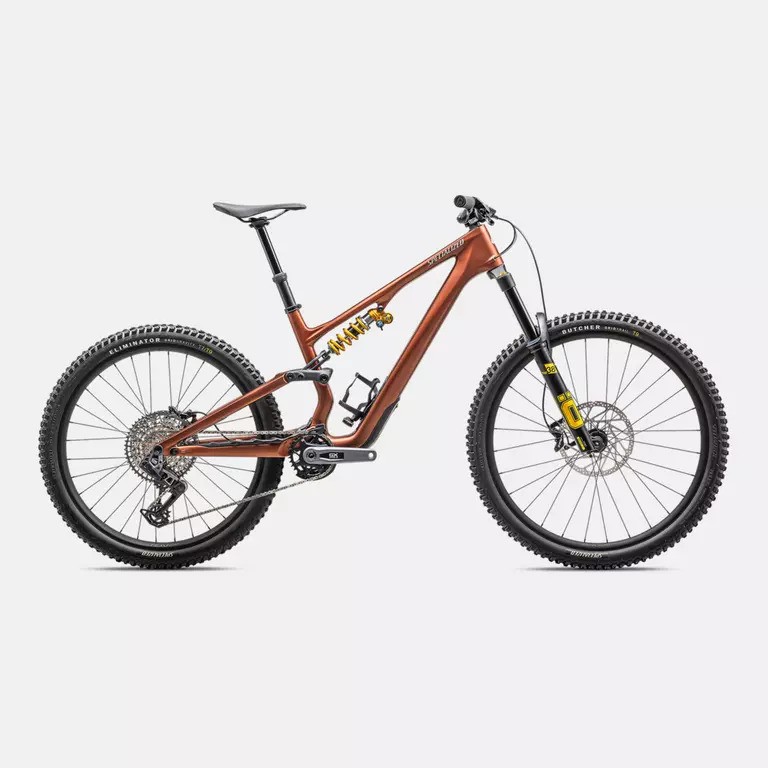
How Heavy is the Stumpjumper Comp?
Manufacturers will rarely publish the weights of any of their bikes online. To get the most accurate weight of any of the bikes we stock, we would recommend going in to your local store where we will weight the bike for you.
How Much Does the Specialized Stumpjumper Carbon Comp Weight?
See above question – we will happily weigh the bikes in person for you.
What is the Stumpjumper Comp?
The Stumpjumper Comp is one particular model of the Stumpjumper Specialized’s range and the designation after the ‘Stumpjumper’ tells you what spec you are getting. Typically, the ‘Comp’ is the second tier up as they usually start with the Stumpjumper, then the Stumpjumper Comp and then models come after such as the ‘Expert’, ‘Pro’, etc all with different specification of forks, gears, brakes and sometimes finishing kit like grips.
There are two models of Comp – Stumpjumper Comp (Carbon frame) and the Stumpjumper Comp Alloy (Aluminium Alloy frame).
Are Specialized Bikes Good for Mountain Biking?
Specialized have developed a reputation for producing some of the best mountain bikes on the market due to constantly improving and pushing the boundaries of what is possible from a full suspension mountain bike. This has only become better over time as new technologies can be utilised to add adjustability and customisation on an already exceptional bike.
There’s a reason the Stumpjumper has been around for over 40 years.
Is Specialized as Good as Trek?
This would depend who you ask as there are constant discussions of who is better than whom in the cycling world but if you ask us, then yes they are as good as each other as they are both reputable companies that have been producing excellent mountain bikes (and all other bikes) for many years.
Where are Specialized Mountain Bikes Made?
Specialized are a Californian company so their bikes are all designed there but the majority of their bikes are made in Cambodia and Vietnam. This is a similar set up to most bicycle manufacturers nowadays.
Where Did The Term “Stumpjumper” Come From?
This is a tough one to answer as we have not heard any special story of how this name came about aside from the fact that mountain bikes jump stumps and it has an excellent ring to it. (I will ask the Specialized rep next time I see them and update here is there is any more to it – Editor)
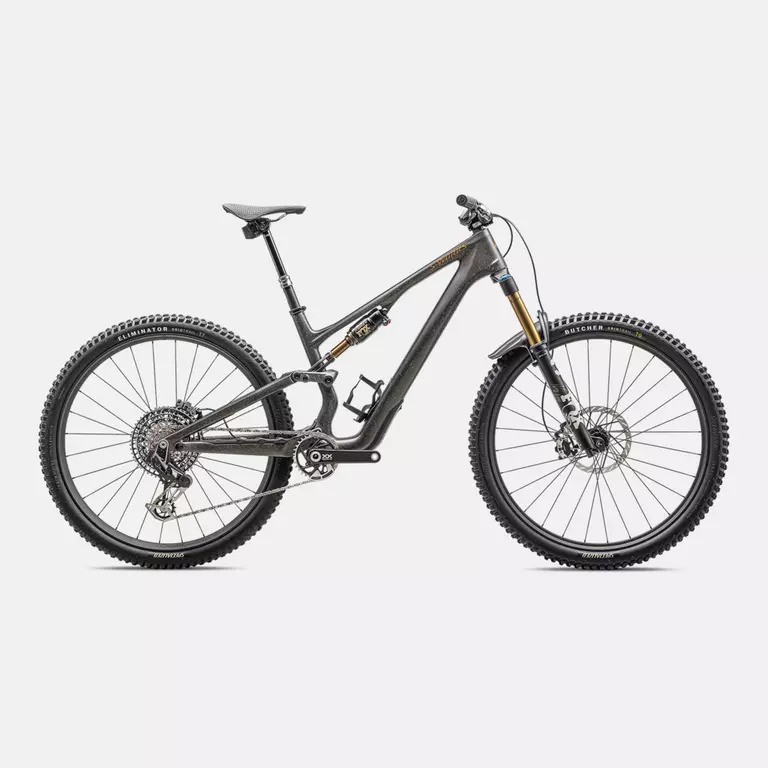
Is the Stumpjumper Evo a Trail or Enduro Bike?
The Stumpjumper Evo does not neatly fall into either of these categories but it is definitely more to the Enduro side of this scale but it would not necessarily be classed as an out and out enduro bike.
What is the Difference Between a Stumpjumper and Stumpjumper Evo?
We discussed this in the body of the article but to sum up – the Stumpjumper Evo has more travel in it’s front and rear suspension and has a slacker geometry for more ability on the downhills. The regular Stumpjumper will climb better but will not be quite as capable on the more technical terrain.
What is a Specialized Stumpjumper Evo?
The Specialized Stumpjumper Evo is the slacker, longer travel sibling of the Stumpjumper. For those that prioritise descending over climbing although the Stumpjumper Evo still climbs relatively well despite the longer travel and slacker angles.
What size Stumpjumper Evo Should I Get?
With Specialized’s new sizing for mountain bikes, it is not quite as simple as it used to be. Your height and proportions will play a part as it always has but Specialized have designed their bikes in a way that allows you to either size up or size down (within reason) depending on whether you would like a longer, more stable MTB for flowing terrain and pure straight line speed, or you would like a more manoeuvrable, nimble, smaller bike for better handling on more technical terrain.
Why Are Stumpjumpers So Popular?
The Stumpjumpers have always been a popular choice for their capability on the trails and the proof is our customer testimonials. We are constantly being told how much they love the bike and its ability to handle a wide variety of trails – cross country, downhill, and some more technical terrains.
Conclusion
There you have it – all things Stumpjumper 15 and a few of the older models thrown in for good measure. As always, if you have any questions on the above or if we can help with anything else, contact us online or in person in one of our stores in Edinburgh, Aberdeen, Newcastle or Leeds.
We hope you have enjoyed this Specialized Stumpjumper review.